
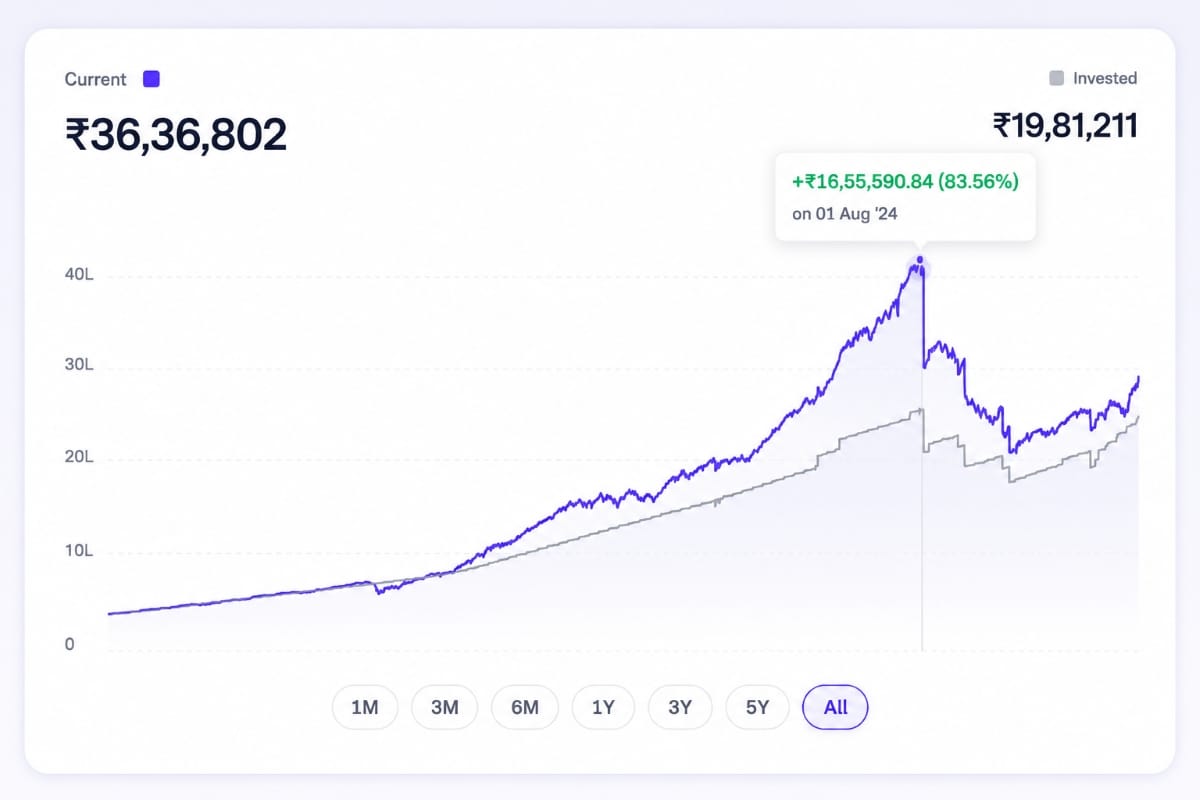
If you want to build wealth in 2026, relying solely on traditional investment methods like fixed deposits will not be enough. You need to leverage the potential of the stock market to grow your wealth. Just like me, many of you may have little to no knowledge about the stock market. But I’m going to share my strategy for picking the right equity mutual funds, which helped me earn 83.56% returns.
I have been investing in mutual funds for more than a decade now, and during this time, I’ve learned several important lessons that help me choose the perfect funds and generate consistent returns. Today, I will help you select the right mutual fund based on your risk appetite. So stay with me throughout this article, as it’s going to be both interesting and insightful. Let’s get started.
What are Mutual Funds, and why is investing in them considered safe and reliable?
Before investing in mutual funds, it is important to understand and learn about them. Let’s simplify this with an example. Suppose you want to invest money in the stock market, but you don’t know which stocks to invest in; you would probably seek guidance from someone who has experience in investing—someone who regularly invests in the stock market and has made good returns.
However, even after taking advice, you might still struggle to invest effectively because stock market investing involves many technical details and nuances that require proper understanding.
Just imagine how convenient it would be if you could give your money to someone highly skilled in stock market investing—someone whose daily job is to track the market and invest in it strategically.
They would invest your money as carefully as if it were their own, generate returns for you from the market, and in return charge only a small fee. This allows you to invest in the market without constantly tracking it yourself or dealing with unnecessary stress. Simply put, this is exactly what mutual funds are all about.
For detailed information about mutual funds, there are several excellent resources available on the Mutual Fund Sahi hai website. Be sure to read about it in depth from a reliable platform to deepen your knowledge and understanding of how it works.
How do Mutual Funds Work?
A mutual fund is essentially a pool of money collected from multiple investors like you and me. This pooled money is then managed by a professional fund manager (or advisor), who invests it in carefully selected stocks and other assets. The goal is to generate returns, which are then distributed proportionally among all investors. In return for managing these investments, the fund charges a small fee from each investor.
And to be honest, in reality, mutual funds are not managed by a single individual—they are run by large, well-established companies that handle assets worth billions of dollars. These companies have teams of experienced professionals who carefully invest this money in the right opportunities with the aim of generating consistent returns for their investors.
Building and maintaining investor trust is essential for these companies—it is the foundation of their business. If they fail to deliver consistent or satisfactory returns, investors are unlikely to continue investing with them. In that sense, mutual funds operate on a strong element of trust.
However, the returns you earn ultimately depend on the type of mutual fund you choose, its nature, and your investment horizon. All these factors play a crucial role in determining how much wealth you can actually build through mutual funds.
Types of Mutual Funds
Mutual funds come in various types, such as equity mutual funds, debt mutual funds, commodity mutual funds, and hybrid mutual funds. Each type offers something unique to investors.
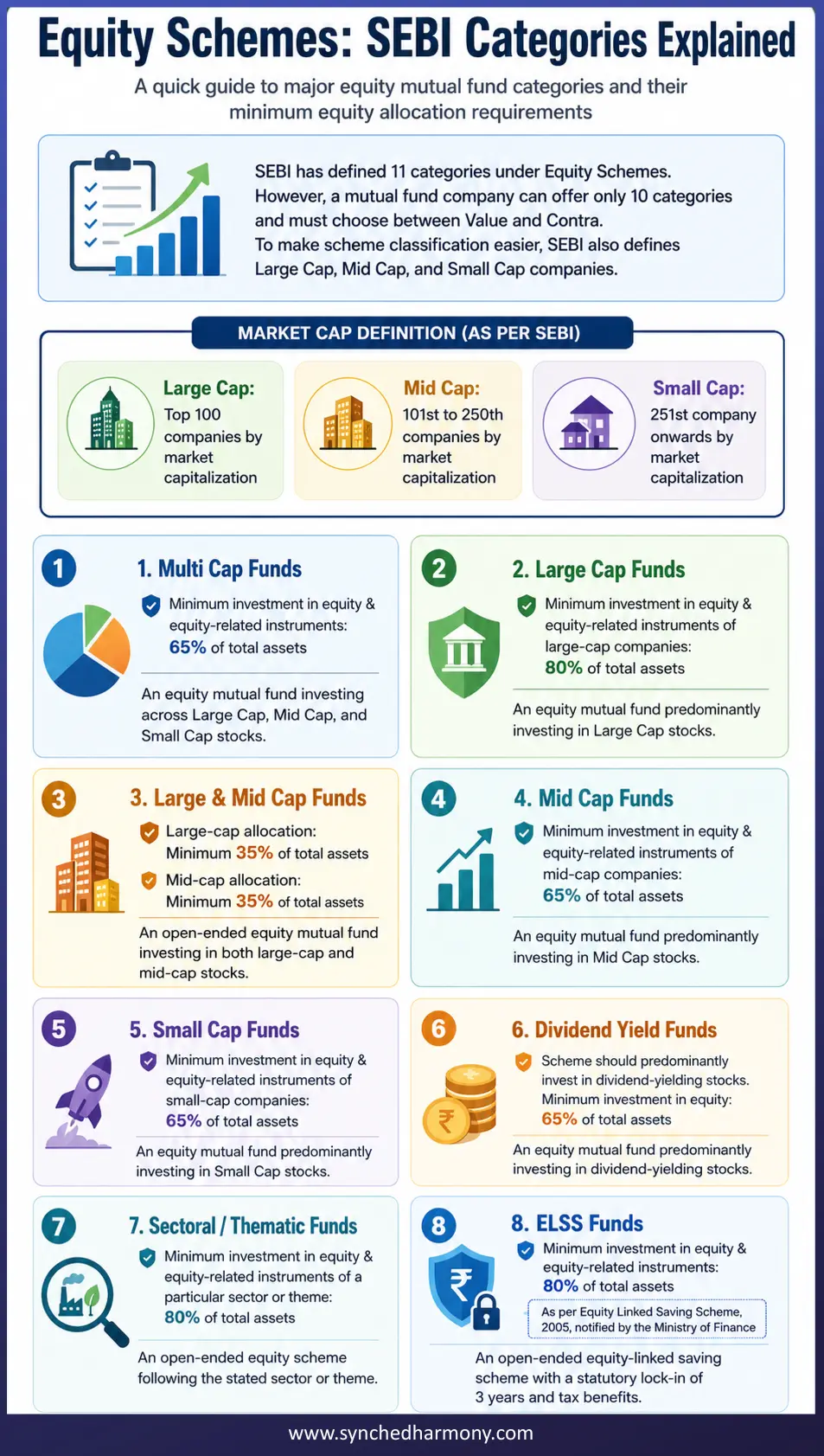
For example, equity mutual funds invest in the stock market, while debt mutual funds focus on relatively safer options like corporate bonds or other fixed-income instruments. Commodity mutual funds allow you to invest in assets like gold and silver. There are also index funds that track specific market indices.
Since there are many types of mutual funds, understanding them in depth can be helpful. I’ve included a link to a reliable article, Types of Mutual Funds, where you can explore each type in detail. For now, in this article, I will explain them at a high level so that you can easily follow along whenever these terms are used later.
How Do Mutual Fund Companies Work?
When you invest money in a mutual fund, you are essentially buying units of that fund. The value for each unit is determined by NAV (Net Asset Value).
NAV = Total Assets – Total Liabilities
Total Outstanding Shares
Total Assets: The value of all the assets that the company owns.
Total Liabilities: The value of all the liabilities the company owes.
Total Outstanding Shares: The total number of remaining units that the company can offer to investors.
Whenever you invest in a mutual fund, units are allocated to you based on the NAV. Let’s understand this with an example.
Suppose you invest ₹1,00,000 in a mutual fund, and the NAV/unit at that time is ₹10, then you will be allotted 10,000 units of that fund. Now, if the NAV rises from ₹10 to ₹12, the value of your investment will increase accordingly. Your ₹1,00,000 investment would become ₹1,20,000, based on the updated NAV.
This is how NAV helps you track the growth of your investment. Similarly, if the NAV decreases, the value of your investment can also go down.
That’s why it is important to know the NAV of the mutual fund you are investing in and how it has performed over the years. Generally, if the NAV increases, the value of your investment grows. However, if the NAV declines significantly over time, it may indicate that the fund is not performing well.
Mutual Fund – Basic Concepts
SIP vs Lump-sum Investment
Another important concept to understand before moving forward is the difference between a SIP (Systematic Investment Plan) and a lump-sum investment.
A SIP is a method of investing a fixed amount regularly—usually every month—into a mutual fund. With each investment, you are allotted units based on the prevailing NAV, and these units accumulate over time.
On the other hand, a lump-sum investment involves investing a large amount of money all at once. The number of units you receive depends on the NAV at the time of investment.
SIP Investment Pros:
- Ideal for investors who do not have a large amount available upfront.
- Helps you invest consistently over time.
- Reduces the pressure of timing the market.
- Suitable for beginners who want to build investing discipline.
SIP Investment Cons:
- Wealth creation may take time because the investment happens gradually.
- Returns may be lower if the market rises sharply and you invest slowly over time.
Lump-Sum Investment Pros:
- Suitable for investors who already have a substantial amount available.
- Can generate higher returns if invested at the right time.
- Allows your entire capital to start working immediately.
Lump-Sum Investment Cons:
- Requires strong confidence in your investment decision.
- Timing and fund selection play a crucial role.
- Can be risky if invested just before a market correction.
Regular Mutual Funds vs Direct Mutual Funds
The main difference is that regular funds are sold through a broker, while direct funds are purchased directly from the mutual fund company. For example, if you invest in a Franklin India Smaller Companies Fund directly through the fund house, it is a direct fund. However, if you invest through a broker such as Bajaj Capital or Bajaj Finance, it is considered a regular fund.
There is no additional risk in either option, but I would strongly recommend choosing direct funds. The reason is simple—when you invest through a broker, they charge a commission, which slightly reduces your overall returns.
For instance, if you invest ₹100 and earn an 11% return, your investment becomes ₹111 in a direct fund. However, in a regular fund, due to the broker’s commission, your final value might be slightly lower—around ₹109 or ₹110.
That difference may seem small at first, but over time, it can have a significant impact on your overall returns. Therefore, it is generally better to select your funds yourself and invest directly in mutual funds to avoid unnecessary commission costs.
Risk Appetite
Risk appetite is essentially your ability to handle risk. The money you invest is your hard-earned income, and while taking some risk is necessary to earn higher returns, your level of risk should match your comfort level.
The amount you can invest also depends on how much risk you are willing and able to bear. If losing money would significantly impact you or cause stress, you should avoid high-risk mutual funds, such as small-cap equity funds.
It’s important to understand that risk appetite is something you need to assess for yourself. A simple way to look at it is this: if you are investing an amount that, even if lost completely, would not affect you much emotionally or financially, then your risk appetite is relatively strong. For example, if you invest ₹10,000 per month and are mentally prepared for the possibility that it could fluctuate or even lose value without causing you distress, you likely have a high risk appetite.
On the other hand, if even a small decline in your investment makes you anxious or worried, it indicates a lower risk appetite.
Understanding this will help you choose the right type of mutual funds and make better investment decisions based on both potential gains and possible losses.
How to Pick the Right Equity Mutual Fund for Long-Term Investing
Before investing in mutual funds, there are a few important things you must keep in mind.
Pre-requisites
- Your Mutual Fund Fundamentals should be clear.
- Decide how much money you want to invest. There is no fixed amount, but generally, allocating around 40–50% of your savings to equity mutual funds is considered reasonable.
- Decide on your investment duration.
If you expect high returns within six months or a year, you may be disappointed. Ideally, mutual fund investments should be made with a minimum horizon of three years. Beyond that, you can consider longer durations such as five, seven, or even ten years. Generally, the longer the investment period, the better the potential returns—though this also depends on the type of fund you choose.
How I Pick Equity Mutual Funds for Investing My Money
Before purchasing any mutual fund, it is very important to analyze the fund properly. In the next step, I will show you exactly how I personally analyze a mutual fund before making an investment decision.
Shortlisting Mutual Funds
Personally, I use the Groww app for investing. You can choose any other investment platform as well, such as ET Money or similar apps. Now, to understand my strategy, let’s walk through it step by step.
First, I open the Groww app and go to the Explore section under mutual funds. From there, I click on All Funds, where all available funds are listed. As you can see, there are around 1,700+ funds listed, so selecting directly from this list would not be practical.
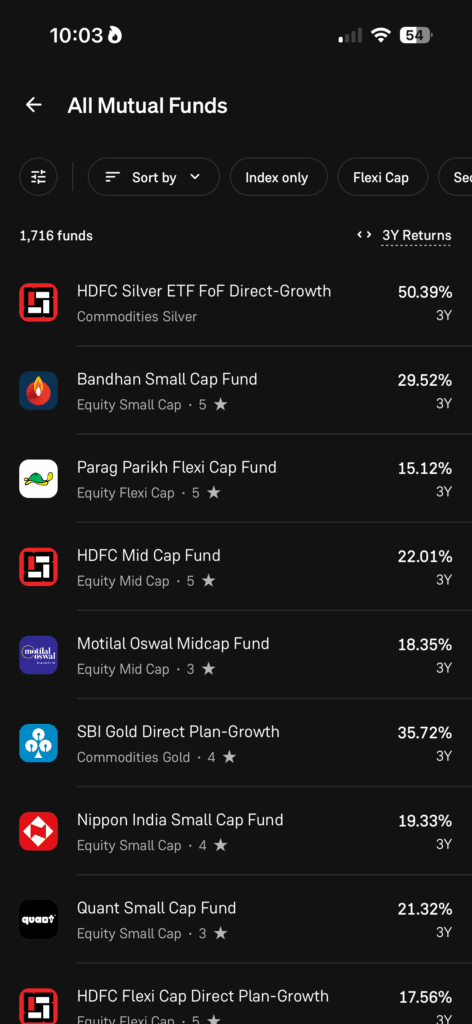
Instead, I use filters to narrow down my options. I start by selecting the category—here, I focus only on equity funds. Even within equity, there are multiple options, so for simplicity, I narrow it down further—for example, by selecting large-cap funds. This helps avoid confusion and keeps the selection process focused.
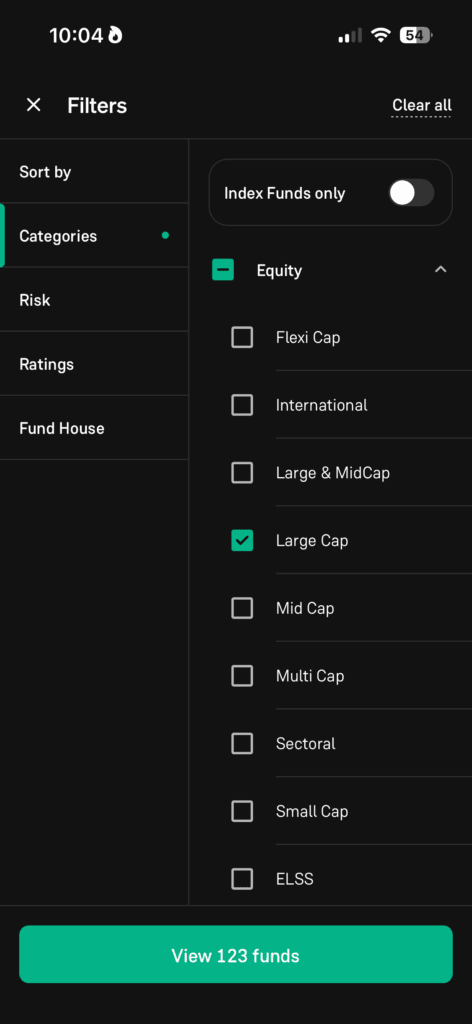
Next, I filter based on risk. Depending on your risk appetite, you can choose funds categorized as high or very high risk. If you are a beginner, I strongly recommend selecting only 5-star rated funds. If no suitable options are available, you can consider 4-star funds, but it’s better to avoid anything below that initially.
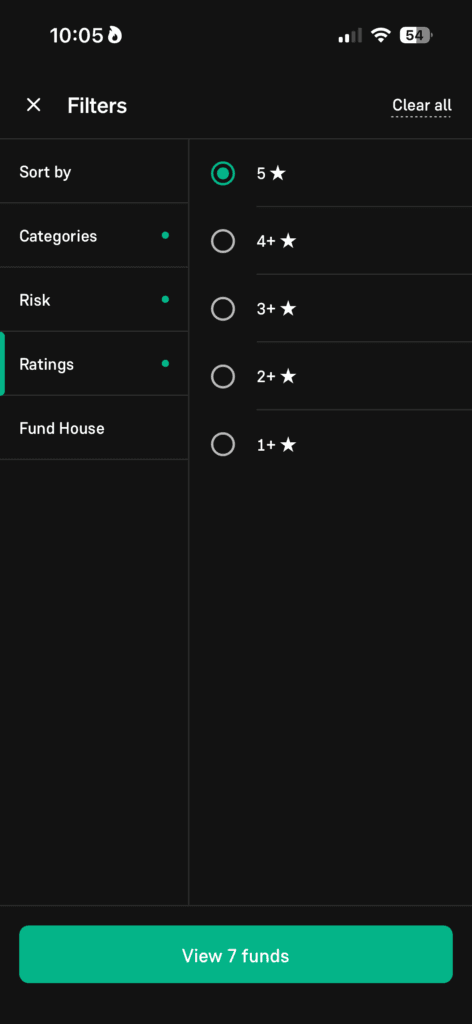
For now, I won’t filter based on fund houses unless you have a specific preference for a particular one. After applying these filters, the list narrows down significantly—for example, to around 7 mutual funds. From here, I proceed with a detailed analysis of these shortlisted funds before making any investment decision.
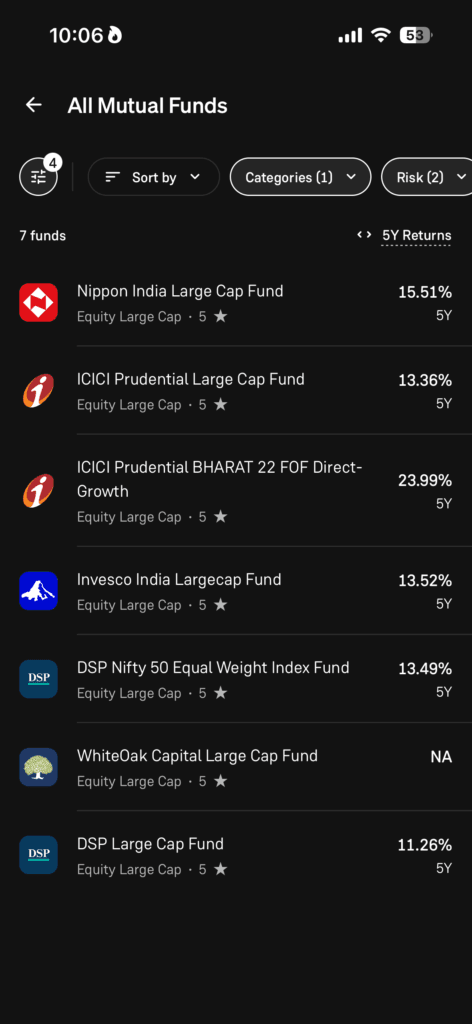
Fund Analysis
After shortlisting the funds, the next step is to do a high-level analysis before diving deeper.
You can see that in the top-right section, key metrics like 1-year, 3-year, and 5-year returns are displayed. You should review the returns for each shortlisted fund to get an initial sense of which are worth analyzing first.
However, it’s important to understand that these returns are not guaranteed for the future—they are based on past performance. Still, they serve as a good indicator for deciding where to begin your detailed analysis.
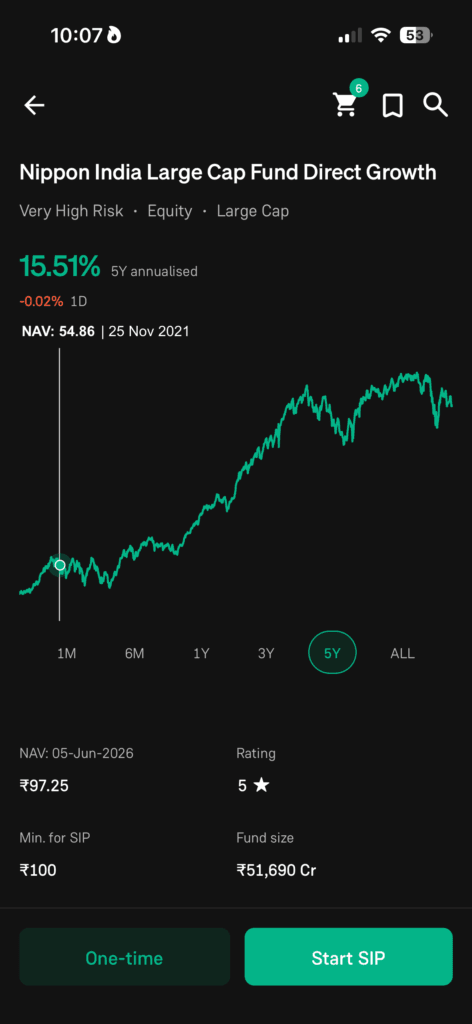
For example, let’s say I choose to analyze the Nippon India Large Cap Fund. First, I open the fund and look at its basic details. This is a Direct Growth plan, categorized under very high risk, and it falls under equity large-cap funds.
You can also view the annualized return graph, which shows performance over different time periods—such as 1 month, 6 months, 1 year, 3 years, 5 years, and overall. This graph gives you a clear picture of how the fund’s NAV has performed over time, whether it has grown consistently or if there have been major dips that could have affected its returns.
Usually, I prefer selecting a fund whose 3-year, 5-year, and overall performance graphs show a consistent upward trend.
After that, I check the latest NAV value. As you can see here, the NAV is around ₹97.55, and it is a 5-star-rated fund. The minimum SIP amount is ₹100, which is the least amount you can start investing with.
Another important factor to consider is the fund size. This is a key indicator when deciding whether to invest in a fund or not. Large-cap funds generally offer more stable returns because they invest in well-established companies that are less affected by market fluctuations.
In this case, the fund size is around ₹46,000 crore. While it may not be ideal for some investors, it is still acceptable for a large-cap equity mutual fund. A very large fund size can sometimes limit flexibility, as the fund manager has to deploy a significant amount of capital in the market rather than holding cash during uncertain periods. Still, this size is reasonable, and I can proceed with further analysis.
Next, I move to the returns calculator section. Here, based on past performance, you can estimate how your investment might have grown. For example, if you invest ₹5,000 monthly through SIP, you can see the total investment amount and its potential value over 1 year, 3 years, 5 years, and even 10 years. This gives you a rough idea of how your money could grow over time.
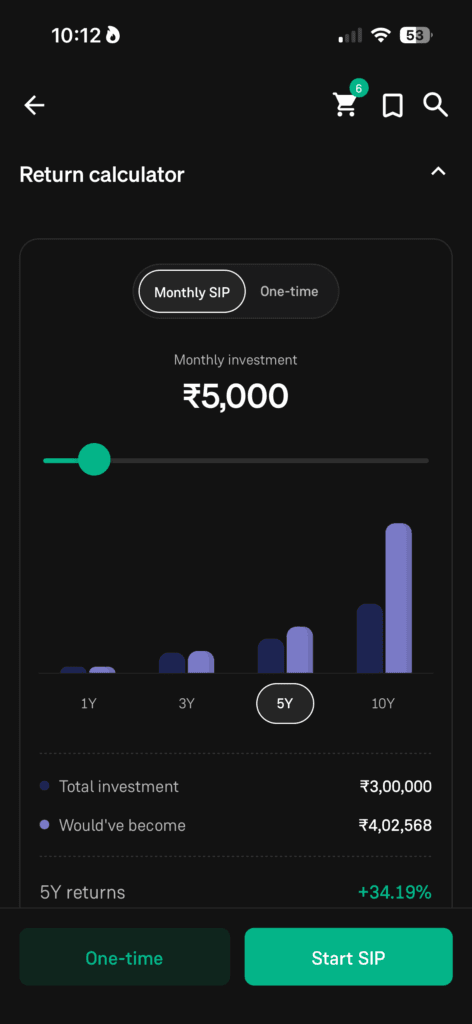
Finally, we move to the holdings section, which is one of the most important parts to analyze.
The holdings section shows where the mutual fund is actually investing your money. Typically, it lists the top stocks in which the fund has allocated its capital. As you can see, companies like HDFC Bank, ICICI Bank, Reliance, Axis Bank, Larsen & Toubro, and Infosys are included. These are well-established companies with a strong presence in the Indian economy.
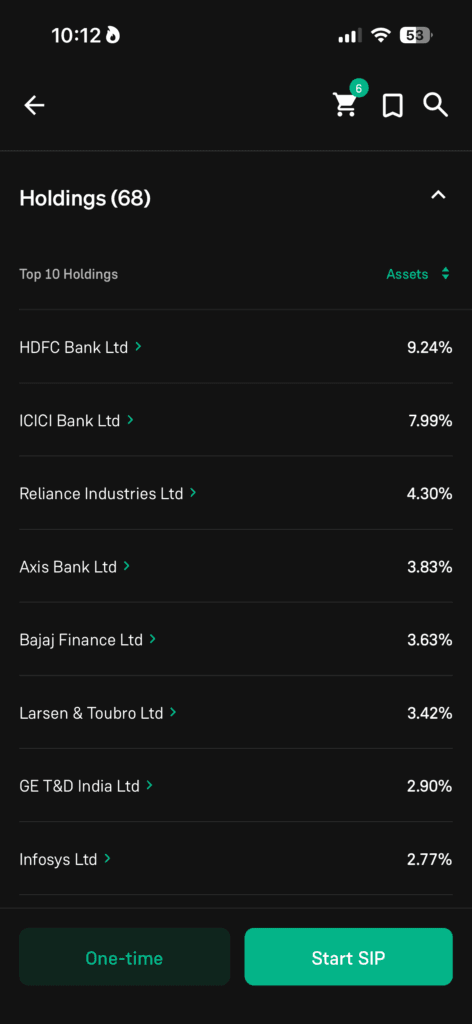
By looking at the holdings, you get a clear idea of the fund’s investment strategy. If you notice familiar and fundamentally strong companies, it usually indicates that the fund is investing in the right direction.
Next, let’s move to the returns and rankings section. This is a useful indicator, but it should not be treated as a guaranteed formula for investment decisions. Here, you can compare the fund’s performance with its category average over different time periods—such as 1 year, 3 years, 5 years, and overall. You also get to see the fund’s ranking within its category.
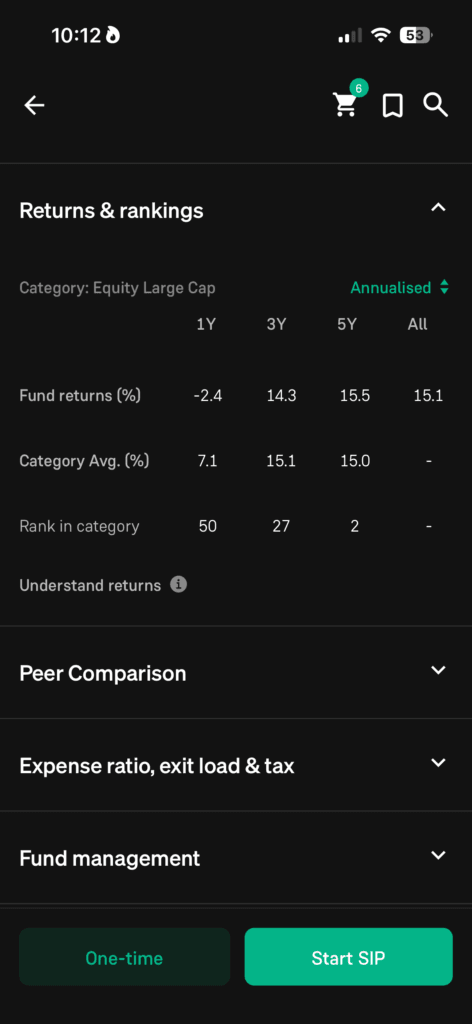
This makes it easier to evaluate whether the fund is outperforming its peers or lagging. For example, if a fund consistently fails to beat the category average over your intended investment duration, you should think carefully before investing in it.
In this case, you might notice that the 1-year and 3-year returns are not very strong, but the 5-year performance is almost among the top-ranked. So, it’s important to evaluate the fund based on your investment horizon and decide accordingly.
Another feature I really like in this app is the peer comparison. It compares similar funds based on factors like time frame, ratings, and expense ratio, helping you understand where a particular fund stands among its peers.
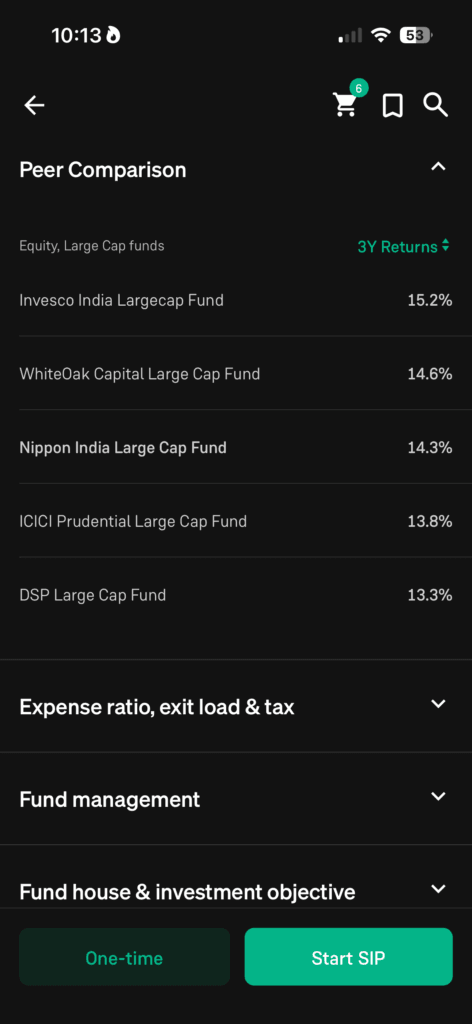
Key factors such as 1-year returns, 3-year returns, ratings, expense ratio, and fund size play a crucial role when selecting a mutual fund. Ideally, a smaller fund size offers more flexibility to the fund manager in deploying capital. However, the fund should still be sufficiently large to ensure stability. For example, some funds may have a smaller size but may not fall under top-rated categories compared to others like Nippon or ICICI.
Now, let’s talk about one of the most important factors—the expense ratio. This represents the cost of managing the fund, including operational expenses and GST. A higher expense ratio means a larger portion of your returns is being consumed by costs. Ideally, you should look for funds with an expense ratio below 0.5%–0.6%.
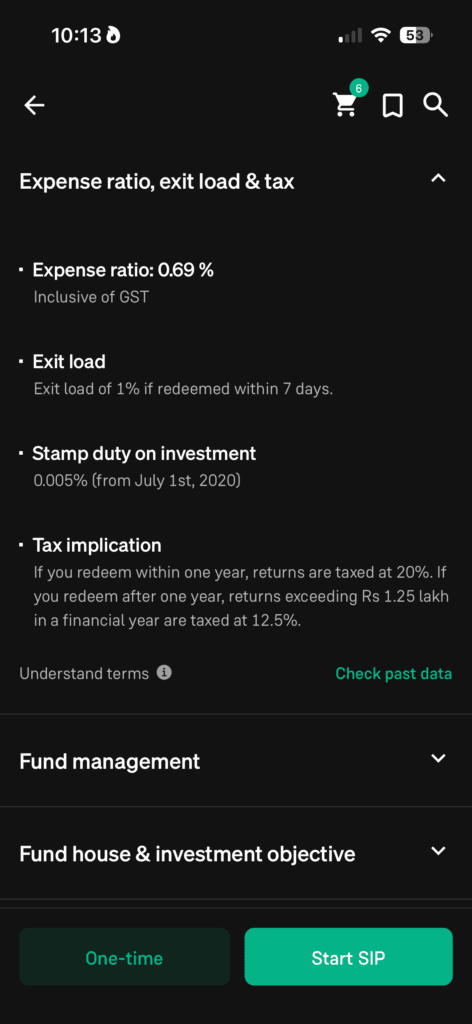
Next is the exit load. This is a fee charged if you withdraw your investment within a short period—usually within 7 days. Generally, a 1% exit load may apply. Since mutual funds are meant for long-term investing, I would recommend having an investment horizon of at least 3 years and avoiding early withdrawals.
Tax implications are also important to understand. Mutual fund returns are taxed under two categories—Short-Term Capital Gains (STCG) and Long-Term Capital Gains (LTCG). For equity funds, LTCG tax is applicable on profits exceeding ₹1.25 lakh in a financial year. This means gains up to ₹1.25 lakh are tax-free, but any amount above that is taxable.
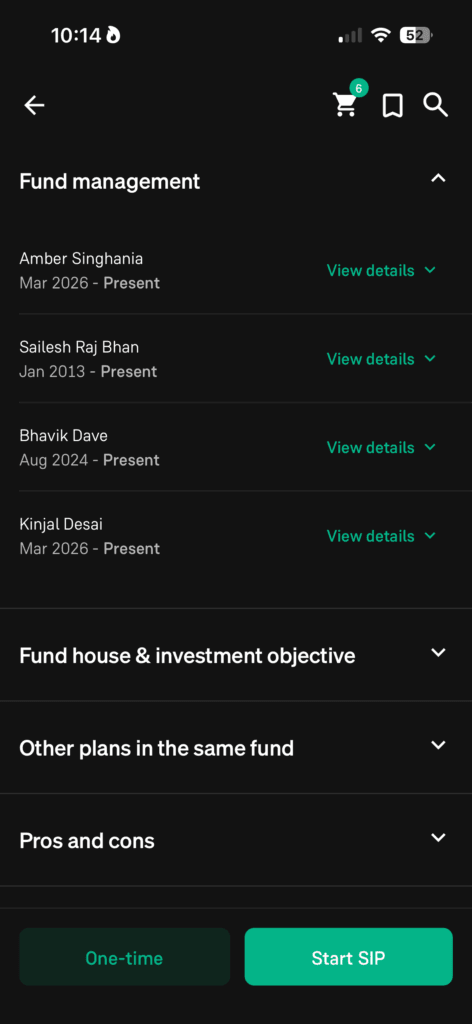
Another critical factor is fund management. Before investing, always check the fund managers’ profiles. You can look them up on platforms like LinkedIn to understand their experience, past funds managed, and tenure with the current fund house. Experienced fund managers with a strong track record are more likely to make better investment decisions.
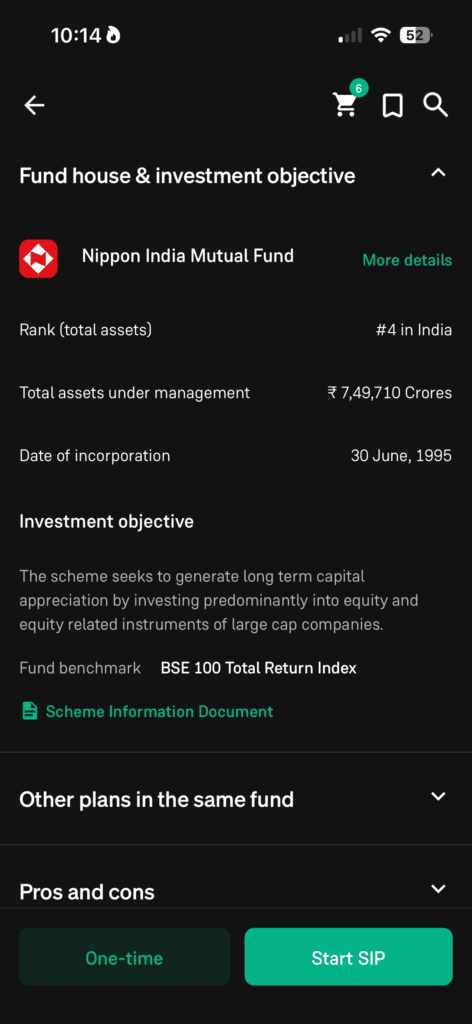
Lastly, evaluate the fund house itself. Check when it was established, its investment objective, and its historical performance. Newly launched funds can be riskier due to a lack of proven stability, so it’s better to choose funds that have demonstrated consistent performance over time.
Finally, let’s talk about the pros and cons section. This provides a quick summary of the fund, highlighting its key strengths and weaknesses.
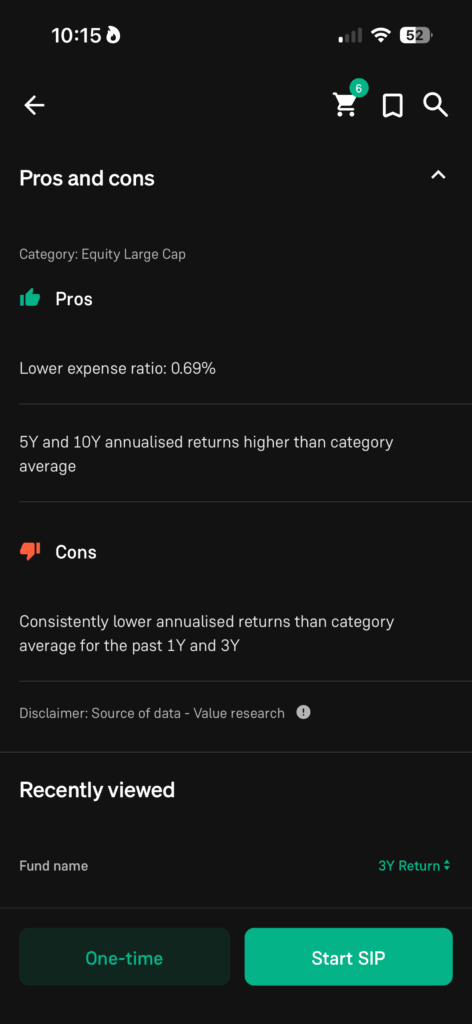
While it may not cover every detail, it is still very useful in helping you make a more informed investment decision.
My Step-by-Step Mutual Fund Selection Process
1. Don’t Rely Solely on Past Returns
- Past returns are useful, but I never make investment decisions based only on historical performance.
- They help identify potential funds, but they are not the deciding factor.
2. Check the NAV (Net Asset Value)
- I review the fund’s NAV as an initial indicator of the fund’s maturity and overall profile.
- While NAV alone does not determine future performance, it helps me decide whether the fund deserves further analysis.
3. Analyze Fund Size and Age
- This is particularly important for small-cap and mid-cap funds.
- I check:
- Total Assets Under Management (AUM)
- How long has the fund been operating
- Large-cap funds are generally more stable, even with large AUMs.
- For small-cap and mid-cap funds, very new or very small funds may carry additional risks despite appearing attractive.
4. Review the Fund’s Holdings
- I examine the fund’s top holdings to understand where my money will be invested.
- For well-known companies, assessment is relatively straightforward.
- For lesser-known companies, I research:
- Business performance
- Stock price trends
- Management quality
- Recent news and developments
- My goal is to evaluate the long-term potential and stability of the underlying companies.
5. Perform Peer Comparison
- I compare the fund against similar funds in the same category.
- Key comparison factors include:
- Returns
- AUM
- Portfolio composition
- Expense ratio
- Risk metrics
- This helps me identify stronger options without analyzing every fund from scratch.
6. Evaluate the Expense Ratio
- Once a fund passes the previous checks, I review its expense ratio.
- My preference is generally:
- Below 0.5%–0.6%
- I may accept a higher expense ratio if the fund demonstrates exceptional quality in other areas.
7. Assess the Fund Manager
- I review the fund manager’s:
- Experience
- Track record
- Tenure with the fund
- Reputation within the industry
- A skilled and experienced fund manager can significantly influence the fund’s performance.
8. Make the Investment Decision
- After evaluating all the above factors, I determine whether the fund aligns with my investment goals and risk tolerance.
- If it meets my criteria, I proceed with the investment.
Summary
- Check past returns (but don’t depend on them).
- Review NAV.
- Analyze fund size (AUM) and fund age.
- Study the portfolio holdings.
- Compare with peer funds.
- Evaluate the expense ratio.
- Assess the fund manager.
- Invest if the fund passes all checks.
In my opinion, no matter how much analysis you do, you can never understand a fund in such depth that you are 100% certain your money will grow there. That’s why it’s important to hedge your investments.
Instead of putting all your money into a single mutual fund, you should diversify your portfolio. For example, don’t invest all your savings only in equity. Allocate a portion to debt funds and some to fixed deposits as well.
Even within equity, avoid investing everything in just one mutual fund. Maintain a balanced mix—include large-cap, small-cap, and flexi-cap funds. This way, if one fund underperforms, others can compensate, helping reduce your overall risk.
It’s important to understand that large-cap funds generally offer stability but lower returns, whereas small-cap funds can provide higher returns but come with higher risk. This is why many investors also consider flexi-cap and hybrid funds to maintain a balance between risk and returns.
Conclusion
I hope this strategy has helped you understand how to select the right mutual fund. As I mentioned earlier, I was once able to generate around 83% returns through mutual fund investing, which eventually helped me achieve a major goal—buying my own house.
At that time, my investment goal was different. Today, my goals have evolved, and I invest accordingly. That’s an important lesson—your investments should always align with your current goals.
I hope you’ve learned something valuable from this article and will start applying these insights in your own financial journey. To be honest, there is no perfect age to begin investing. I would strongly suggest that as soon as you start earning, you should use your income wisely—spend what’s necessary, but make sure to save and invest a portion of it. Over the long term, this can create significant benefits.
If you found this article helpful, do share it with others who might benefit from it. And don’t forget to subscribe to our website to receive more such informative content in the future.

Hello, I’m Shubhankar — the voice behind Synched Harmony.
I created this space with one simple vision: to help people solve real problems with practical solutions and clarity. I’m someone who believes most confusion in life doesn’t come from lack of intelligence, but from lack of clear thinking and perspective. Through my writing, I try to break down everyday struggles into a simple, usable understanding. I write from my own reflections, observations, and real-life experiences—not theoretical advice. I’m not here to give perfect answers, but to offer clearer perspectives that actually make sense in real-life situations. Because I believe life becomes easier when we stop overcomplicating things and start understanding them better.